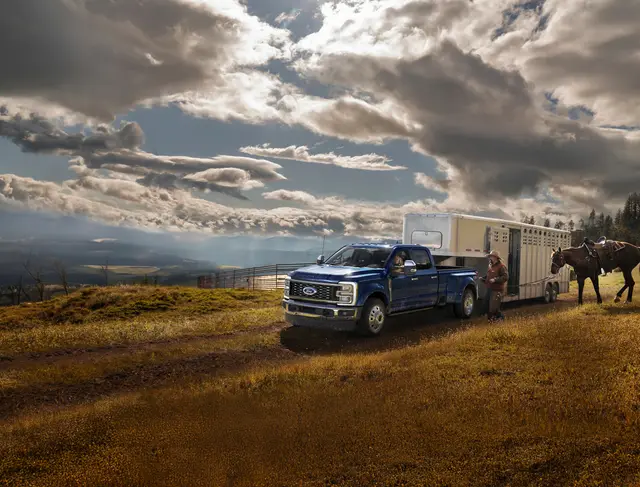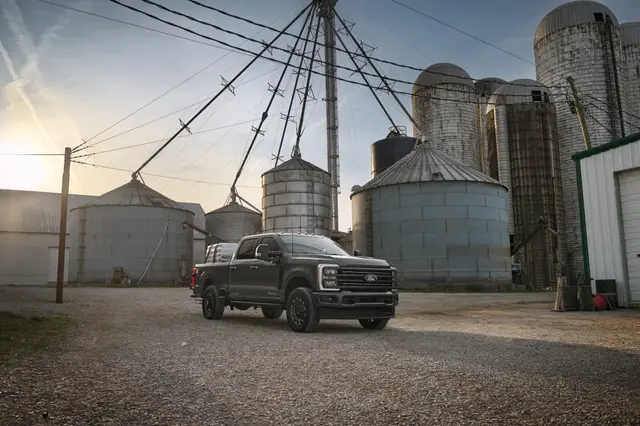

Ford Super Duty winter driving in Nassau County rewards preparation more than horsepower. These trucks are heavy and capable, but an empty bed and a slick road can still make for a long slide. A few habits and a quick pre-winter check keep a Super Duty steady from Levittown to the Long Island Expressway.
Bottom Line: Good tires, the right weight in the bed and slower inputs matter more than raw power on snow and ice.
- Tires are the biggest traction factor on a heavy truck
- An empty bed can unload the rear axle and reduce grip
- Smooth steering, braking and acceleration beat speed every time
Ford Super Duty Winter Driving Starts With Tires
Tires decide traction. Four-wheel drive helps a Super Duty get moving, but it does not shorten stopping distance. Tread depth, tire type and pressure do that work, so inspect them before the first snowfall.
Check the label, not a guess. The tire and loading label on the driver’s door jamb lists the recommended pressure for your truck. Cold weather drops pressure, so check it more often from November on. If you are new to the lineup, our Ford Super Duty F-250 complete guide for Levittown covers the models.
Consider a winter set. For trucks that work through the cold, winter tires stay flexible and grip better on ice and packed snow. Ask our service team what suits your truck and load.
For more detail, see Ford Super Duty XLT vs Lariat: Is the Lariat Worth It for Nassau County Buyers?.
Weight, Plowing and Towing in the Cold
| Winter situation | What to watch | Smart habit |
|---|---|---|
| Empty bed | Light rear end, easier wheel spin | ✓ Add secured, rated weight if needed |
| Plowing | Added front weight | ✓ Follow the plow maker's guidance |
| Towing | Longer stopping distance | ✓ Allow far more space and speed down |
Never guess at capacity. Payload and towing numbers depend on the exact truck, so use the door-jamb label and owner’s manual rather than rounding. Our Super Duty payload and bed guide for Nassau County explains how to read them.
Secure any ballast. Loose weight can shift in a stop and cause damage or injury. Use proper tie-downs and keep it forward of the tailgate.
Read next: Ford F-150 4x4 in New York Winters: Traction, Payload Ballast, and Cold-Weather Towing.

"Super Duty owners tend to trust the truck a little too much on the first snow day. Slow down, leave space and let the tires do their job."
General Manager, Levittown Ford
Driving Habits for Slippery Roads
Brake early and gently. Heavy trucks need more distance, and sudden braking can upset the chassis. Let the anti-lock system work if you need it, and ease off if you feel slipping.
Watch bridges and ramps. Overpasses and parkway on-ramps freeze before other pavement. Slow down before you reach them, not on them.
Want your truck winter-ready? Schedule a winter service visit
A Winter Prep Checklist for Nassau County Super Duty Owners
- Battery. Cold weather is hard on batteries, so have it tested before the first freeze.
- Wipers and washer fluid. Use cold-rated fluid and replace worn blades.
- Brakes and fluids. Have the service team inspect brake wear and fluid condition.
- Underbody rinse. Road salt clings to the frame, so rinse the underside after storms.
- Emergency kit. Carry a blanket, a flashlight, jumper cables and a shovel.
Know your recalls. Check your truck at the NHTSA recall lookup each fall. Levittown Ford serves Levittown, East Meadow, Wantagh and Seaford, and you can schedule winter service ahead of the first storm.
What to Carry and What to Skip
Keep the essentials in the cab. A shovel, traction aid, flashlight, blanket, phone charger and jumper cables take little room and can save a long wait. Keep a full tank when storms are forecast.
Skip the risky shortcuts. Do not use cruise control on slick roads, do not tow without checking your limits and do not assume four-wheel drive makes you immune to ice. Slow and steady gets a heavy truck home.
Know when to stay put. If conditions are bad, delaying the trip is the safest call. A Super Duty can wait for a plow to pass.
Plowing and Work Use Notes
Follow the plow maker’s guidance. Added front weight changes the truck’s balance, so check the owner’s manual and the upfitter’s instructions. Ask the service team about any front-axle or suspension considerations.
Allow warm-up time. Cold fluids and tires need a few minutes, so avoid hard acceleration at first. Inspect lights, wipers and hitch connections before you leave.
FAQ
Is a Ford Super Duty good in snow? With four-wheel drive and good tires it is capable, but its weight and size still call for slow, smooth driving. Tires and load matter most.
Should I put weight in the bed of my Super Duty in winter? An empty bed can reduce rear traction, but weight must be secured and within your truck’s rated payload. Check the door-jamb label and owner’s manual.
Do I need winter tires on a Super Duty? They are worth considering if the truck works through winter. Ask our service team what suits your truck and how you use it.
How does the Super Duty compare to a Ram HD in winter? Both are capable when equipped with good tires and sensible loads. Our Ram HD vs. Super Duty vs. Silverado HD comparison covers the models.
Where can I get a winter check near Levittown? Levittown Ford serves Levittown, East Meadow, Wantagh and Seaford. Schedule service online or call ahead.
Closing CTA
A Super Duty can handle Nassau County winters well when its tires, load and driver are prepared. Start with tires, respect the weight, and drive smoothly.
Levittown Ford helps drivers across Levittown, East Meadow, Wantagh and Seaford get their trucks ready for the cold.