

Long Island has changed significantly as an EV destination over the past three years. Public charging infrastructure has expanded across Suffolk County, home charging has become a standard feature of EV ownership, and range anxiety - the dominant concern of early adopters - has largely given way to practical questions about cost, convenience, and daily routine.
Bottom Line: Owning an EV on Long Island is genuinely practical for most Huntington-area drivers in 2026. The combination of home Level 2 charging, PSEG EV program support, and a growing public network handles the vast majority of daily and weekly driving needs without significant compromise.
- Home Level 2 charging covers 90%+ of typical Long Island EV owners’ daily needs
- PSEG Long Island’s EV programs offer rebates and off-peak charging rates that reduce electricity costs
- Public fast charging is available across Suffolk County for longer trips and backup needs
- Winter range reduction of 15-25% requires planning but is manageable with proper habits
Home Charging: The Foundation of Long Island EV Ownership
The shift that changed EV ownership from difficult to easy was simple: a 240V outlet in your garage. A Level 2 home charger - typically a 48-amp unit installed on a dedicated circuit - adds 25-35 miles of range per hour and fully charges most EV batteries overnight. For Huntington and Northport homeowners with attached or detached garages, this is the standard setup.
Level 1 charging (a regular 120V household outlet) adds approximately 4-5 miles of range per hour - enough for daily driving of 40-50 miles if you plug in every night, but insufficient if your daily mileage varies. Level 1 works as a backup option, not as a primary charging strategy.
Level 2 charger installation costs vary, but most Huntington homeowners pay $500-$1,200 installed for a quality 48-amp unit on a dedicated circuit. PSEG Long Island offers rebates that reduce this cost, and federal tax credits for home EV charger installation can further offset the expense - verify current availability when purchasing.
PSEG Long Island’s EV Programs
PSEG Long Island offers EV-specific rate plans that allow owners to charge during off-peak hours at significantly lower rates. Charging between 11 PM and 6 AM on time-of-use plans can reduce electricity costs by 30-40% compared to standard rates. For a Volvo C40 Recharge driven 12,000 miles per year, the off-peak rate difference saves $200-$400 annually.
The utility’s EV programs also include rebates for Level 2 charger installation and occasionally for the charger hardware itself. These programs change annually - check PSEG Long Island’s website directly for current program availability when planning your charger installation.
Smart chargers that integrate with utility time-of-use programs automatically schedule charging for off-peak windows, requiring no manual management. Most modern EV chargers include this functionality through smartphone apps.
Public Charging Across Suffolk County
The public charging landscape in Suffolk County has improved substantially. Electrify America has added high-speed DC fast charging stations accessible to Huntington-area drivers. ChargePoint and EVgo maintain networks of Level 2 and DC fast charging stations across shopping centers, parking structures, and highway corridors.
DC fast charging adds 100-150 miles of range in 20-40 minutes on most modern EVs. For a Huntington driver heading to Manhattan for the day, a 20-minute DC fast charge at a convenient location - during a coffee stop or lunch - handles the return trip without requiring home charging timing adjustments.
The Long Island Expressway corridor has charging locations that make east-west travel across Suffolk County practical. Highway travel to the Hamptons, Montauk, or the North Fork is within range for most EVs with 250+ miles EPA range, though planning a charging stop on longer trips is standard practice for EV owners.
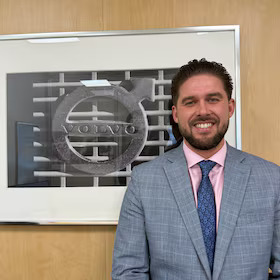
"New C40 Recharge owners are almost always surprised by how quickly home charging becomes routine. After two weeks, most of our Huntington customers tell us they've stopped thinking about it - they plug in when they get home, wake up to a full charge, and never worry about range on their daily commute."
General Manager, Volvo Cars of Huntington
Winter on Long Island: The Real Range Impact
Cold weather reduces EV range meaningfully. At 20 degrees Fahrenheit, lithium-ion batteries operate less efficiently, and cabin heating draws additional power that reduces available range. Most Long Island EV owners see 15-25% range reduction in January and February compared to spring conditions.
Practical strategies minimize the impact. Pre-conditioning the cabin while still plugged in at home uses grid power rather than battery power to warm the interior and battery - a feature standard on the Volvo C40 Recharge through the Volvo Cars app. Starting your commute with a warm cabin and warm battery reduces the in-motion power draw significantly.
For most Huntington drivers commuting 20-40 miles daily, even a 20-25% winter range reduction leaves ample range when starting from a home Level 2 charge. The scenario where winter range becomes a genuine concern involves longer-than-average daily trips combined with reliance on public charging only - a situation most home-charging owners don’t encounter.
The Actual Annual Cost of Electricity on Long Island
PSEG Long Island’s residential electricity rates average approximately $0.22-$0.26 per kWh at standard rates in 2026. A Volvo C40 Recharge uses approximately 3.5-4 miles per kWh in real-world Long Island driving. At 12,000 miles annually, electricity consumption totals approximately 3,000-3,400 kWh.
At standard rates, annual electricity costs run $660-$885. On PSEG’s EV off-peak time-of-use plan, costs drop to $450-$650 per year for the same mileage. Compared to a similar-sized gas crossover getting 28 MPG at Long Island premium prices, the C40 Recharge saves $700-$1,200 per year in fuel costs.
Over five years at 12,000 miles annually, electricity costs total approximately $2,500-$4,000 depending on rate plan - compared to $7,000-$10,000 in gasoline for a comparable gas crossover. That fuel savings gap is a meaningful part of the EV value equation for Long Island buyers.
Common Questions Before Buying an EV on Long Island
Can I charge an EV in an apartment or condo? Apartment and condo charging is the most significant practical challenge for Long Island EV ownership. Level 1 charging from a standard outlet is feasible for low daily mileage, but building management permission and available wiring for Level 2 installation vary by property. Ask your building directly about EV charging before purchasing.
What happens if I run out of range? Modern EVs provide extensive warnings well before battery depletion and limit performance before shutdown. Roadside assistance from Volvo Cars includes battery charging service. The scenario where an EV owner is stranded without warning is extremely rare with modern navigation systems that actively route around range limitations.
How long does a DC fast charge take? For the Volvo C40 Recharge supporting up to 150 kW DC fast charging, adding 80 miles of range takes approximately 15-20 minutes. Charging from 10% to 80% takes approximately 30-35 minutes at peak charging speed.
Do EVs work well in beach and salt air environments? Volvo’s EV components are sealed and weather-resistant. Long Island’s coastal environment - including salt air exposure in Huntington Harbor areas - is not a specific concern for properly designed EVs. Standard washing habits that prevent salt buildup on undersides apply to EVs the same as any vehicle.
Long Island EV ownership in 2026 is practical for the vast majority of Huntington-area households that have access to home garage charging. The infrastructure, utility programs, and vehicle technology have matured to the point where switching from gas feels routine rather than experimental.
Visit Volvo Cars of Huntington to test drive the C40 Recharge and discuss how home charging works for your specific Huntington address.