

Driver Focus: Distraction Mitigation System is standard on all four 2026 Subaru Solterra trims. It is the one safety technology that monitors the driver rather than the road ahead — using an interior-facing camera to detect distraction and drowsiness, and alerting the driver before those conditions become a collision risk. For Hudson Valley commuters who regularly drive the Taconic Parkway on early mornings and late evenings, Driver Focus addresses one of the most underappreciated causes of accidents: not the car ahead, but the driver’s own attention.
Bottom Line: Driver Focus is standard on all 2026 Solterra trims. The system uses a camera to monitor the driver’s face for signs of distraction (gaze away from road) and drowsiness (eye closure patterns, head position). When detected, it provides escalating visual and audible alerts.
- Standard on Premium, Limited, Limited XT, and Touring XT
- Interior-facing camera monitors driver face and eye gaze
- Detects both distraction (looking away) and drowsiness
- Escalating alert system: visual first, then audible
- Functions independently from EyeSight’s forward-facing systems
What Driver Focus Monitors
Driver Focus uses a camera positioned in the instrument cluster or dashboard area, facing the driver. The camera tracks the driver’s face, eye gaze direction, eye open/closed state, and head position continuously.
The system processes two distinct risk conditions:
Distraction Detection
Distraction is detected when the driver’s gaze is directed away from the forward road view for a sustained period. This includes looking at a phone on the center console, looking out the side window, or sustained gaze toward infotainment controls.
The threshold for detection is calibrated to distinguish normal driving behavior — brief mirror checks, instrument glances — from the sustained off-road gaze associated with distracted driving. A brief look at the speedometer does not trigger the system; prolonged engagement with something off the forward road view does.
Drowsiness Detection
Drowsiness detection monitors eye closure patterns — specifically, the blink rate changes and partial eye closure associated with fatigue — and head position changes like drooping or bobbing. These physical signatures of drowsiness are distinct from normal driving posture and allow the system to detect fatigue before it progresses to microsleep.
Drowsy driving is a particular concern on roads like the Taconic Parkway, where the rhythmic, low-stimulation driving environment encourages fatigue. Hudson Valley commuters who drive 30-50 minutes on the Taconic at 6:30 AM or 7:00 PM are exactly the population where drowsiness detection provides real safety value.
How Driver Focus Responds
When the system detects distraction or drowsiness, it responds with a graduated alert sequence:
Level 1 — Visual alert: An icon or indicator on the instrument cluster or 14-inch display provides a visual notification. This is designed to bring the driver’s attention back to the road without startling.
Level 2 — Audible alert: If the visual alert does not produce a driver response (eyes return to road, posture correction), the system escalates to an audible alert — a chime or warning tone that is more difficult to miss.
The escalation logic is designed to distinguish between a driver who is momentarily distracted and corrects quickly versus one who is unresponsive to the first alert.
Driver Focus and EyeSight: Complementary Systems
Driver Focus and EyeSight address different parts of the collision risk equation:
EyeSight monitors what is happening in front of the vehicle — other cars, pedestrians, obstacles — and intervenes when those objects create a collision risk.
Driver Focus monitors the driver — whether the human behind the wheel is engaged enough to respond to the road conditions EyeSight is monitoring.
The most dangerous scenario is a distracted or drowsy driver in a vehicle approaching a risk that EyeSight’s pre-collision braking can address — but where the driver’s condition means there is no human-initiated braking before EyeSight must intervene. In those situations, the combination of Driver Focus (alerting the driver to refocus) and EyeSight (braking if the driver doesn’t respond) creates a layered safety architecture more robust than either system alone.
Why Driver Focus Matters for Hudson Valley Commuters
The Taconic Parkway profile: The Taconic is a rhythmic, moderately-demanding road — enough curves to require attention, long enough stretches of consistent driving to encourage a kind of automatic pilot that is associated with both distraction and drowsiness. It is one of New York State’s most scenic routes, which also means there is visual competition for the driver’s gaze.
Early morning and late evening commutes: The majority of drowsy driving incidents occur during commute hours when sleep debt is highest — specifically, before 9 AM and after 9 PM. Hudson Valley residents who commute to Poughkeepsie, Fishkill, or further toward the city are in exactly these windows.
Long solo commutes: Commuting alone for 30-60 minutes on a familiar route is a high-risk scenario for drowsiness — the lack of conversation, the familiarity of the route, and the early hour combine to create conditions where fatigue can develop gradually without the driver’s awareness.
Driver Focus in the Context of the Full Solterra Safety Suite
The 2026 Solterra’s safety suite — EyeSight, Blind Spot Monitor, Front Cross Traffic Assist, Automatic Emergency Steering, Traffic Jam Assist, and Driver Focus — works as a layered system rather than a collection of independent alerts. Driver Focus is the component that addresses driver condition; the remaining systems address road conditions and other vehicle behavior.
For Hudson Valley families who use the Solterra as a primary commuter vehicle, the full suite provides the kind of protection that reduces both accident probability and collision severity in the conditions Hudson Valley roads actually produce.
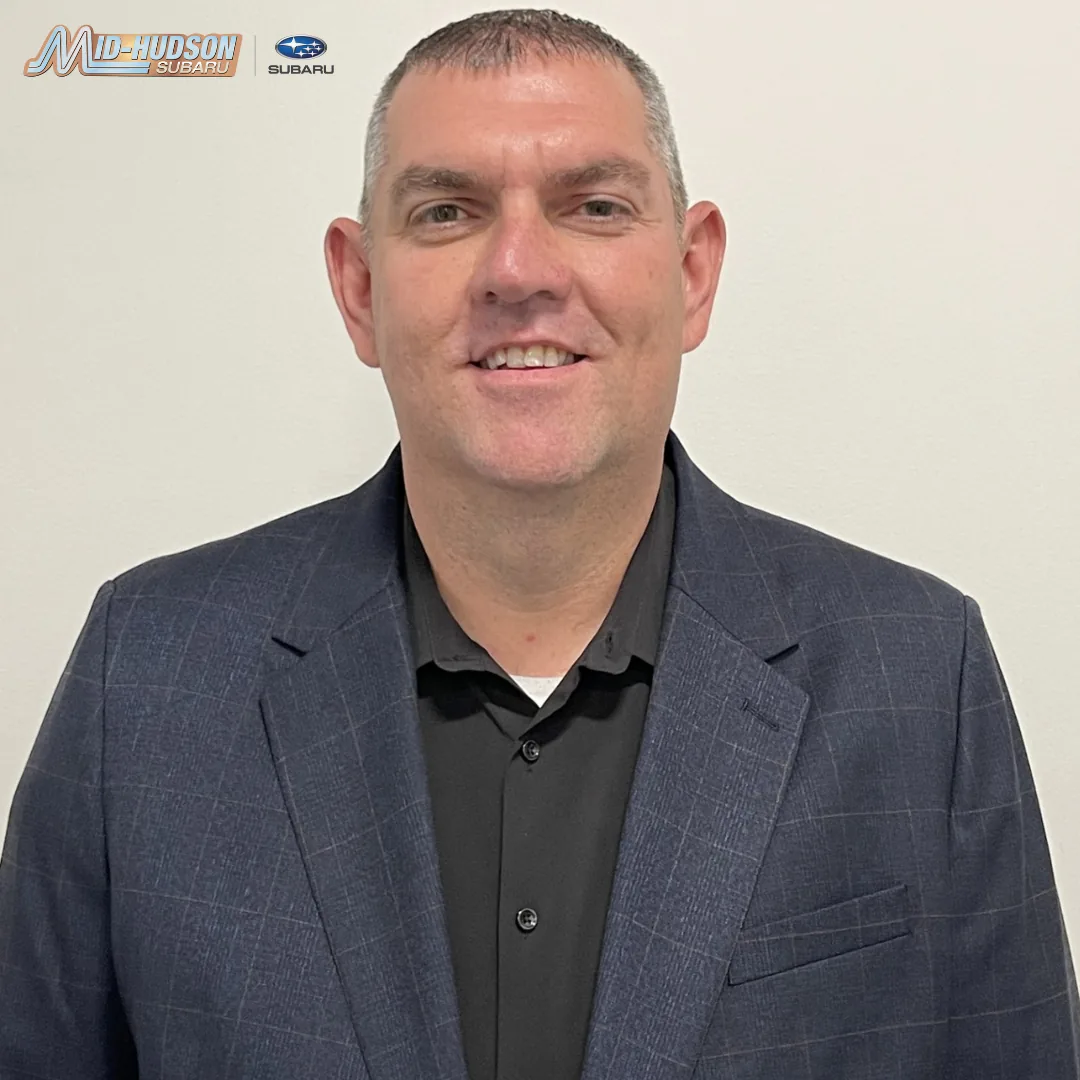
"Driver Focus is the system that people forget about and then mention six months into ownership. Someone will tell me they were tired on the way home and the car alerted them — and it was the right call. The Taconic is a road that rewards attention and punishes the kind of gradual fatigue that happens when you've been driving it for years and start to go through the motions. Having a system that's watching the driver when the driver's attention is slipping is exactly what you need on a commute like that."
General Manager, Mid Hudson Subaru
🧮 EV vs. Gas Savings Calculator: See exactly how much you could save on fuel by switching to this electric model. Try the free calculator →
🧮 EV Battery Range Estimator: Estimate real-world range based on weather, speed, and your driving style. Try the free calculator →
Safety data from NHTSA and IIHS; fuel economy from EPA. Actual mileage varies.
Frequently Asked Questions
Is Driver Focus available on the entry Solterra Premium trim? Yes. Driver Focus is standard on all four 2026 Solterra trims. It is not a higher-tier exclusive feature.
Does Driver Focus work if I wear sunglasses? Driver Focus is designed to function with standard sunglasses. Dark or mirrored lenses may affect the system’s camera performance. For questions about specific eyewear compatibility, consult the Solterra owner’s manual or Mid Hudson Subaru’s service team.
Can Driver Focus be disabled? Driver Focus can typically be disabled through the vehicle’s settings menu. It is enabled by default. Disabling it is not recommended for everyday driving use.
Does Driver Focus record video of the driver? Driver Focus uses camera data for real-time processing and alert generation — it does not record or store video footage of the driver for later retrieval under normal operating conditions. Refer to the vehicle privacy documentation for complete data handling details.
How does Driver Focus handle drivers who wear glasses? Driver Focus is designed to function with most eyewear including glasses. The system tracks facial landmarks and gaze direction rather than relying on bare eye contact. Contact Mid Hudson Subaru if you have specific concerns.
Experience the Full Safety Suite at Mid Hudson Subaru
Browse current Solterra inventory at Mid Hudson Subaru or contact the team to schedule a test drive that covers the full EyeSight and Driver Focus experience on a representative Hudson Valley route.